





E20 Ethanol Petrol in India: Engine Problems, Public Concerns & Policy Debate
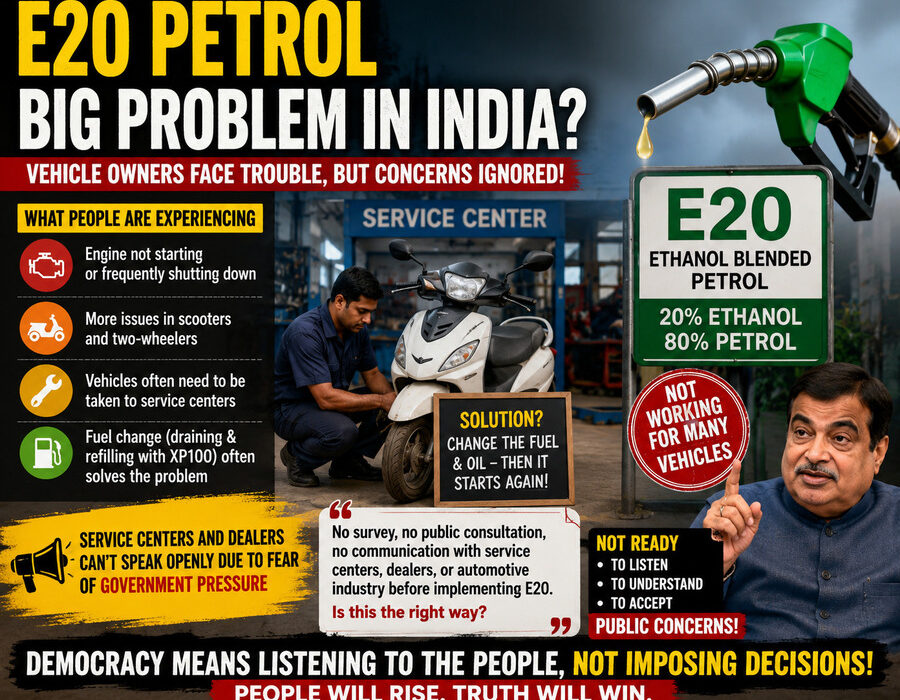
One of the biggest issues in India today is the use of E20 ethanol-blended petrol. It is reportedly causing significant problems in vehicle engines, especially in scooters and other two-wheelers. Many vehicles are frequently breaking down and being taken to service centers. In several cases, after draining the existing fuel and replacing it with regular high-octane petrol (such as XP100), the vehicles started running normally again.
According to this viewpoint, these are not isolated incidents—many such cases are being reported, with some service centers seeing multiple vehicles with similar issues in a single day.
The speaker also criticizes Union Minister Nitin Gadkari, alleging that he is unwilling to reconsider or listen to concerns about the E20 fuel policy. The claim is that no proper consultation was conducted with the general public, vehicle owners, service centers, dealerships, or the automotive industry before promoting E20 fuel. It is argued that there was no comprehensive survey, public voting, or stakeholder consultation to determine whether existing vehicles were truly compatible with E20 fuel or to assess the practical problems it might create for consumers.
According to this viewpoint, many service center technicians are not able to openly say that the problem is being caused by E20 petrol. They are concerned that if they publicly criticize the fuel, they could face trouble from the authorities or be subjected to unnecessary scrutiny or pressure because the policy is government-backed.
As a result, service centers often avoid directly blaming E20 fuel. Instead, they may simply recommend changing the fuel and refilling the vehicle with a different petrol, saying, “Try replacing the fuel; the vehicle may start working normally again.” However, they generally do not explicitly state that E20 petrol is the cause of the issue.
The claim is that service centers and vehicle dealers are reluctant to speak openly because they fear that if their comments become public or appear in the news, they could face repercussions or harassment.
Does this mean that India will now be run in an authoritarian manner, where whatever our leaders decide must simply be accepted? No, that is not acceptable, and it should never be accepted. If that were to happen, there would be strong public resistance, and people could seek to overturn the government through democratic and constitutional means, holding the ruling party accountable.