






India successfully tested three long-range missiles.
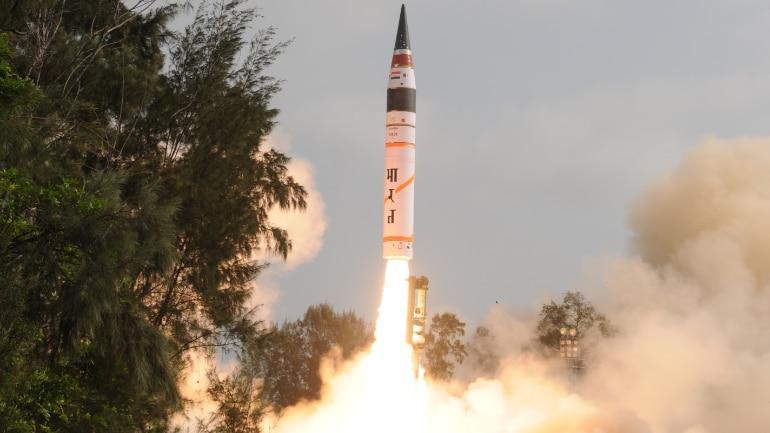
DRDO has achieved another major milestone by successfully testing two missiles. These missiles were tested on three separate occasions. The first missile is an interceptor missile. An interceptor is a missile designed to destroy an enemy missile while it is still in the air.
What makes this interceptor particularly significant is that its capability is not limited to the lower atmosphere. It can travel into the upper layers of the atmosphere and neutralize hostile missiles there as well. In other words, India’s interceptor missile can destroy an enemy ICBM during its flight.
You may have heard the term ICBM many times in newspapers and news reports. But do you know what ICBM actually means? ICBM stands for Intercontinental Ballistic Missile—a long-range missile capable of carrying conventional or nuclear warheads over distances of more than 5,500 kilometers, allowing it to strike targets across continents.
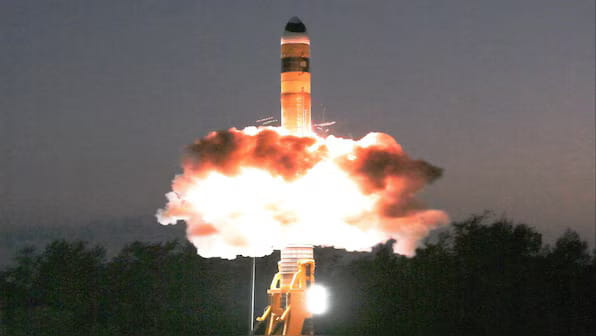
In this report, let us also explain the meaning of ICBM so that the next time you hear or read the term, you can easily understand it.
ICBM stands for Intercontinental Ballistic Missile—a missile capable of traveling long distances from one continent to another. For example, an ICBM launched from Asia could potentially strike a target in Africa. Generally, such missiles have a range of thousands of kilometers and are designed to deliver payloads over very long distances.
After launch, ICBMs first travel into the upper layers of the atmosphere. To put this into perspective, they reach altitudes close to, but generally lower than, those of satellites in low Earth orbit. From there, they re-enter the Earth’s atmosphere and continue toward their designated targets.
We hope this explanation helps you better understand the meaning of an ICBM and the technology behind it.
The most significant aspect of the recent DRDO test is that the interceptor was designed to counter a long-range ballistic missile. Unlike systems such as Israel’s Iron Dome, which is primarily a rocket-defense system that may involve multiple interceptors, the missile tested by DRDO operates on a “one shot, one kill” principle. This means a single interceptor missile is intended to destroy a single incoming missile.
Until now, only a few countries—including the United States, Russia, China, and Israel—were known to possess comparable capabilities. With this successful test, India has demonstrated its entry into this select group.
Another important detail is that the test did not use a simple dummy target. Instead, an actual missile was used as the target to determine whether the new interceptor could effectively neutralize a real ballistic missile threat. The successful trial has demonstrated that India now possesses technology capable of intercepting long-range missiles at significant distances, strengthening the country’s missile defense capabilities.
Former President Dr. A.P.J. Abdul Kalam, widely known as the “Missile Man of India,” once said about India’s missile program, “Strength respects strength.” The meaning of this statement is simple: when a nation possesses strength and capability, every other power in the world is compelled to respect it.
With this vision, Dr. Kalam played a key role in advancing India’s missile development program. Following the path he laid down, DRDO has now achieved another successful missile test.
In this latest trial, the capability of an anti-ship missile—a missile designed to destroy naval vessels—was evaluated. The missile tested is a medium-range weapon, capable of striking enemy warships at distances ranging from approximately 1,000 to 3,000 kilometers.
To understand its significance, consider this example: if such an anti-ship missile were launched from Gujarat, it could potentially target and destroy an enemy naval vessel located near Karachi. This demonstrates the strategic reach of India’s growing missile capabilities.
The test has also helped DRDO achieve another milestone. As reported, India’s anti-ship missile is capable of reaching targets up to 3,000 kilometers away. By comparison, the United States’ Tomahawk anti-ship missile can strike targets at around 1,600 kilometers, while Russia’s Zircon missile has a range of approximately 1,000 kilometers. China claims that its DF-26 anti-ship missile can reach targets as far as 4,000 kilometers away, but such capabilities have not been publicly demonstrated in a widely observed operational test.
As a result, India now possesses one of the world’s longest-range proven anti-ship missile capabilities.
About a week before the current test, DRDO conducted another anti-ship missile trial. During that test, the missile achieved hypersonic speed, flying at nearly ten times the speed of sound. Such speeds make interception extremely difficult and significantly enhance the missile’s effectiveness.
Missiles often capture public imagination. Watching a missile soar through the sky is exciting and impressive. However, behind every successful launch lies years of research, enormous financial investment, advanced technology, and the dedicated efforts of thousands of scientists, engineers, and technicians. The journey of building a missile is far more challenging than the brief moments of its flight.
Take a look at what goes into developing a missile and understand the immense effort required to make one operational.
Based on average estimates, it takes approximately 6 to 8 years from the initial design stage to the final production of a missile. The research and development phase alone can cost between ₹2,000 crore and ₹3,000 crore. Once the research is completed, the manufacturing cost of a single missile can range from ₹25 crore to ₹35 crore, depending on its capabilities and specifications.
After testing is completed, producing a batch of 50 missiles can take around three years. From the initial design phase to final production, the development of a missile involves the efforts of more than 2,000 people, including scientists, engineers, technicians, and support staff.
The next time you see an Indian missile soaring across the sky on television, remember that its flight is built upon years of dedication, innovation, and the relentless efforts of thousands of Indians.
India has made remarkable progress in missile technology. At the same time, the country is now on the verge of achieving another major milestone in the field of aerial surveillance. DRDO’s ambitious Netra Project has reportedly reached its final stage.
Netra is an Airborne Early Warning and Control System (AEW&C). In simple terms, it is a sophisticated radar system mounted on an aircraft. Aircraft equipped with such radars fly at high altitudes and monitor enemy aircraft, missiles, and other aerial threats over vast distances.
One of the key advantages of airborne radar is that it can detect enemy military installations and movements that may be hidden behind mountains or terrain features. Ground-based radars often struggle to perform this task due to line-of-sight limitations.
Until now, India has relied significantly on foreign countries for such advanced airborne radar capabilities. However, DRDO has developed an indigenous airborne radar system, marking an important step toward self-reliance in defense technology.
According to reports, the Netra airborne radar system could receive its final clearance on June 26, bringing India closer to strengthening its aerial surveillance and early-warning capabilities.