




US vs India: Why UPI and RuPay Are Raising Concerns for Visa and Mastercard
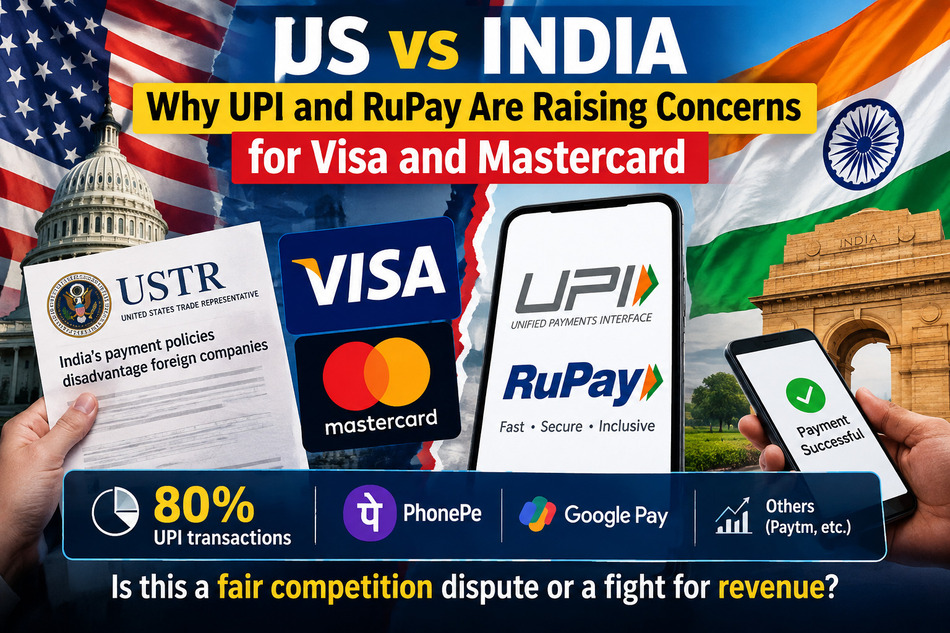
In November 2021, Visa, one of the largest payment companies in the United States, reportedly filed a complaint directly with the US government. The company alleged that India was promoting its homegrown payment network, RuPay, while putting foreign companies like Visa at a disadvantage.
The reason was simple: transactions through UPI and RuPay were available without certain transaction charges, encouraging people to use these Indian payment systems. As a result, companies like Visa and Mastercard were facing pressure on one of their major revenue streams: the fees they earn from card transactions.
Typically, payment networks and card companies earn revenue through transaction-related fees. Depending on the payment arrangement, various charges may apply to card transactions. For example, on a payment of ₹10,000, a fee of ₹100 to ₹200 would represent 1% to 2% of the transaction value. However, the actual amount earned by a payment network varies depending on the arrangement and should not be confused with the total fees charged across the entire payment ecosystem.
Because UPI transactions are generally free for ordinary users, the traditional card-payment business model faces a different competitive environment in India.
Now, in 2026, the US Trade Representative, or USTR, the agency responsible for investigating international trade issues, has reportedly highlighted concerns that India’s payment policies are disadvantaging foreign companies and that US card companies are losing business because of UPI.
Let’s understand this with an example.
According to recent market figures, approximately 80% of UPI transactions are concentrated in just two apps: PhonePe and Google Pay. This pattern has continued for several years, with both platforms accounting for a major share of India’s UPI market. This year, their combined share reportedly fell slightly below 80% for the first time, while other apps, such as Paytm, have gradually increased their market share.
Interestingly, PhonePe and Google Pay are also linked to American companies. PhonePe is majority-owned by Walmart, while Google Pay is operated by Google, which belongs to Alphabet.
In other words, American companies already have a significant presence in the very payment market that the United States is reportedly criticizing India for promoting.
So, the real question is: Is this dispute actually about fair competition, or is it about protecting the revenues of traditional payment companies?
Another complaint reportedly raised by Visa concerned the introduction of RuPay credit cards on UPI. Visa argued that giving RuPay access to this payment channel created an unfair advantage for the Indian payment network.