



Jabalpur High Court on 73% Reservation in Madhya Pradesh: OBC 27% Quota and 13% Vacancies Controversy
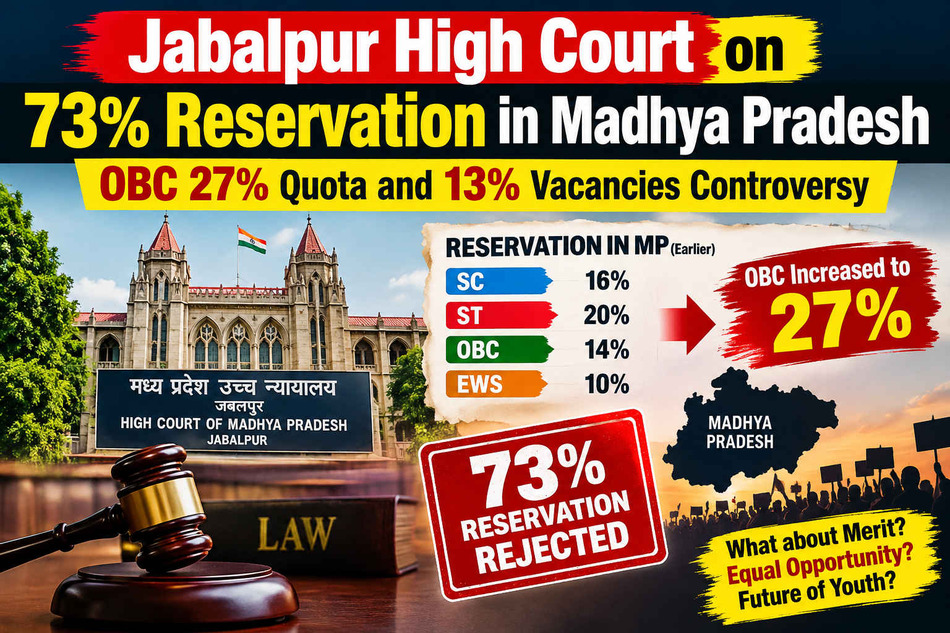
The Jabalpur High Court has rejected the Madhya Pradesh government’s decision to implement 73% reservation. Yes, a verdict has reportedly been delivered today by the Jabalpur High Court in Madhya Pradesh in a long-pending case that had remained at the center of public debate over the proposed 73% reservation policy.
You should know that Madhya Pradesh previously had a reservation system under which Scheduled Castes (SCs) received approximately 16% reservation, Scheduled Tribes (STs) received 20%, Other Backward Classes (OBCs) received 14%, and Economically Weaker Sections (EWS) received 10%.
Following this, the state government and opposition parties held discussions, after which a decision was made to increase OBC reservation from 14% to 27%. This decision sparked widespread controversy across the country.
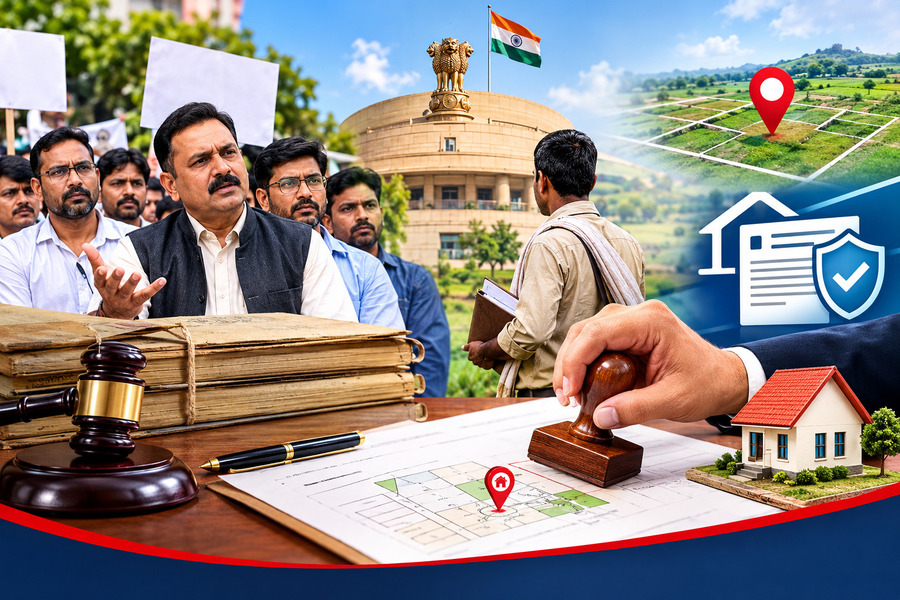
Following the controversy, some candidates approached the Jabalpur High Court. The court reportedly ruled that the remaining 13% of posts in pending recruitment processes should also be filled as soon as possible and treated as unreserved seats.
The state government had allegedly kept several recruitment processes on hold in anticipation of implementing 27% OBC reservation, with the intention of allocating the disputed 13% of posts to OBC candidates once the policy came into effect.
It is important to understand the broader context. Madhya Pradesh was also in the news recently over a recruitment process in the MPESB Agriculture Department, where allegations of 100% reservation were raised.
Several government schemes in Madhya Pradesh, whether intended for students or other beneficiaries, have also faced criticism over allegations that they disproportionately favor particular caste groups or communities.
The Jabalpur High Court’s decision, as described in this account, could serve as an important lesson for the country. Critics argue that continuously increasing reservation percentages could raise questions about equal opportunity and the balance between reservation policies and open competition.
Consider this: if 73% of seats in a state were reserved, only 27% would remain open to all candidates through the unreserved category. What would that mean for competition and merit-based selection?
There have also been public debates surrounding NEET admissions, including claims about candidates with negative scores receiving opportunities to pursue medical education. Meanwhile, a student from the EWS category in Madhya Pradesh reportedly had to approach the Supreme Court to argue for his right to obtain a medical seat at a private college.
This raises questions about the practical implementation of reservation policies and whether eligible candidates from different categories receive the benefits and opportunities to which they are entitled.
The concerns of the OBC community also deserve consideration. However, the debate should extend beyond one community and examine whether reservation policies are implemented fairly and in accordance with constitutional principles.
The speaker argues that OBC and general-category communities should work together to raise questions about fairness, equal opportunity, and the implementation of reservation policies.