




SEO: Grow Your Business with Expert SEO Services from Times of Group
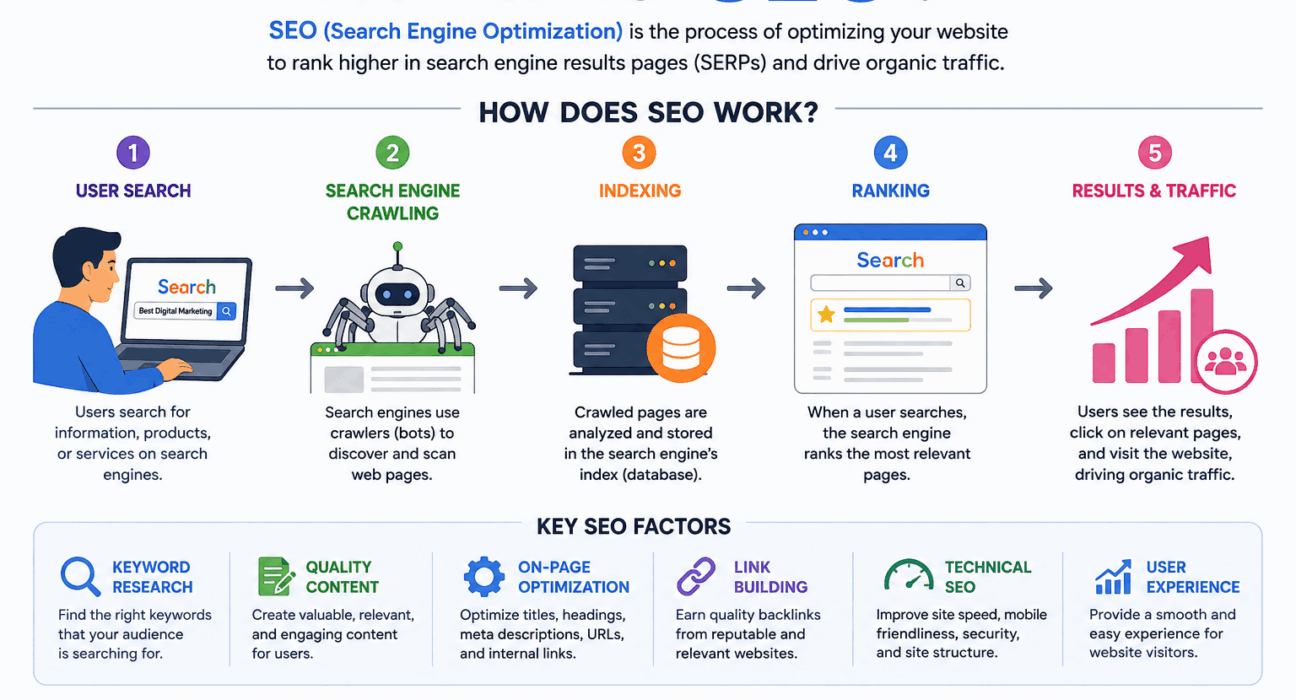
What is SEO in 2026 – 2027, and how does it work?
SEO (Search Engine Optimization) is a technique used to improve the visibility and ranking of web pages, product pages, images, services, and other content in search engine results. Whenever we want a website, product, service, image, or any type of content to appear in Google search results and gain better visibility, SEO helps achieve that goal. The process of optimizing content to improve its search engine ranking and online visibility is known as Search Engine Optimization (SEO).
What is the first step in the Search Engine Optimization (SEO) process?
The first step in Search Engine Optimization (SEO) is to thoroughly analyze the client’s website. We carefully review the website to understand the industry it belongs to, the services it provides, and the nature of the business. After analyzing the business and its services, we discuss the client’s objectives to understand their goals, expectations, and desired outcomes. Once we clearly understand the client’s requirements, we begin the SEO process.
After reviewing the website and discussing the client’s goals, the next step is to conduct a technical audit. We check whether the website has been hacked, contains malware, or has any search engine penalties that could affect its performance. Identifying and resolving these issues is essential before moving forward with SEO activities.
Once the technical review is complete, we move on to the core SEO process. The most important and foundational step in SEO is keyword research. Keyword research is the backbone of any successful SEO campaign. If the right keywords are selected, the website has a much better chance of generating targeted traffic and business opportunities. However, if keyword research is done incorrectly, even a top-ranking website may fail to generate meaningful leads or sales.
During keyword research, we analyze factors such as search volume, competition level, and user intent. Highly competitive keywords can be difficult and time-consuming to rank for, and in some cases may not be practical for a new or growing website. Therefore, we often focus on a combination of medium-competition, low-competition, and strategic long-tail keywords.
Long-tail keywords are particularly valuable because they can help a page rank for multiple related search terms. For example, if we target the keyword phrase ‘Digital Marketing Company in India,’ Google may also recognize and rank the page for related keywords such as:
- Digital Marketing
- Digital Marketing Services
- Digital Marketing Company
- Digital Marketing India
Google’s algorithms understand the context of content and can rank a single page for many relevant keyword variations. SEO is no longer limited to ranking for one exact keyword; a well-optimized page can appear in search results for numerous related search terms.
After completing keyword research, we create a list that includes a mix of low, medium, and high-competition keywords. This keyword list and Keywords URL Mapping is then sent to the client for review and after approval. The client evaluates the selected keywords to ensure they align with their business goals. Once the keyword URL Mapping are approved, we proceed to the next phase of the campaign, which is On-Page SEO optimization.
On-Page SEO optimization
In On-Page SEO, the first step: We review the target keywords and determine whether the existing pages contain content that is relevant to those keywords. We analyze whether the page content aligns with the selected keywords and adequately addresses the user’s search intent.
If a page does not have sufficient content, the first task is to add high-quality content to the website. Generally, a page should contain approximately 400 to 600 words of relevant and informative content to be considered valuable and useful. The content should naturally include the target keywords, but keyword overuse or over-optimization should be avoided.
In the past, websites often achieved better rankings by repeatedly using the same keywords throughout their content. However, this is now an outdated SEO technique. Modern search engines, especially Google, focus on understanding the meaning, context, and intent behind sentences rather than simply counting keyword occurrences. Google’s algorithms analyze the content to determine what information is being provided and then rank pages based on relevance, quality, and usefulness to users.
If a page contains spammy content or excessive keyword optimization, it may struggle to rank or could even be negatively affected by search engine algorithms. Therefore, content quality is always the top priority.
The first stage of On-Page SEO focuses on content creation and improvement, followed by content optimization. Content optimization includes refining headings, keyword placement, readability, structure, internal linking, and overall relevance.
If we determine that there is no existing page that properly matches a target keyword, we create a new page specifically for that keyword. The new page is developed around the relevant product, service, or topic and includes high-quality, optimized content. Once the new page is created, we begin the optimization process to improve its visibility and search engine performance.
Second Step is Content Optimization:In the optimization process, the first thing we check is whether the page title is relevant to the target keyword. The title should be closely related to the keyword and the topic of the page. It is not necessary for the exact keyword phrase to appear in the title, but the title should contain similar or related terms that clearly indicate the page’s subject.
After reviewing the title, we analyze the headings and subheadings within the content. The main heading should be closely aligned with the page topic and target keywords. The primary heading is usually assigned an H1 tag, which carries the highest importance in the page structure. Generally, only one H1 tag is used per page.
The subheadings are then organized using H2, H3, and other heading tags based on their importance and hierarchy. This structured approach helps both users and search engines understand the content more effectively.
Internal linking: we review the content to ensure that relevant keywords are naturally included. We also implement internal linking where appropriate. For example, if a page mentions a related service or product that has its own dedicated page, we create internal links to those pages. Internal linking improves website navigation, helps users find relevant information easily, and assists search engines in understanding the relationship between different pages on the website.
Use Images: We also use relevant images within the content. Images and graphics help users understand information more easily and improve the overall user experience. Visual elements can make complex topics simpler and more engaging.
Another important factor is content structure. The content should be written in clear and concise sentences and should avoid overly long paragraphs. Ideally, paragraphs should be limited to two or three lines whenever possible, making the content easier to read and scan.
Readability: Finally, we evaluate the readability of the content. We check whether the content is easy to understand, well-structured, and user-friendly. If everything meets the required standards, the content is fully optimized and finalized for publication.
On page Step 3. important aspects of On-Page SEO include creating and optimizing meta tags, meta titles, and meta descriptions. These elements help search engines understand the content of a page and can improve click-through rates from search results.
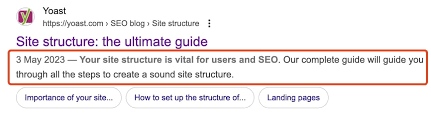
Image optimization is also an essential part of SEO. This includes adding appropriate alt tags to images so that search engines can understand what the images represent. Images should also be properly compressed and optimized to reduce file size without sacrificing quality. Large and heavy images can negatively affect website loading speed, which can impact both user experience and search engine rankings.
In addition, we install and configure important SEO and analytics tools such as Google Search Console and Google Analytics. These tools help monitor website performance, track visitor behavior, identify technical issues, and measure SEO results.
We also create and properly configure essential technical SEO files, including:
- robots.txt – Controls how search engine crawlers access and index website content.
- sitemap.xml – Provides search engines with a structured list of website pages to improve crawling and indexing.
All of these tools and files must be properly installed, configured, and integrated to ensure that the website is fully optimized for search engines and performs efficiently
On Page SEO Step 4: On-Page SEO involves checking technical aspects of the website. In this stage, we analyze the website’s overall performance, loading time, and page speed. We carefully evaluate whether the website is performing efficiently and meeting modern SEO standards.
If we identify any areas that require improvement, such as code optimization, performance enhancements, or technical updates, we make the necessary changes to improve the website’s speed and functionality. However, these technical optimizations are usually charged separately because they are highly specialized, time-consuming, and require advanced technical expertise.
Technical SEO work can also be risky because even a small mistake in the code or website configuration can affect the website’s design, functionality, or overall performance. For this reason, technical optimizations should always be performed by experienced professionals who understand website architecture, coding, and SEO best practices.
Proper technical optimization helps improve website speed, user experience, search engine crawling, and overall SEO performance, making it an important part of a successful SEO strategy
Off-Page SEO (Search Engine Optimization) Service
Off-Page Optimization refers to all SEO activities that are performed outside of the client’s website. Any optimization work carried out beyond the website itself is considered part of Off-Page SEO.
One of the primary components of Off-Page SEO is link building. Regardless of the method used, creating backlinks from external sources falls under Off-Page Optimization. These backlinks can be obtained through various techniques, including:
- Article submissions and article marketing
- Image sharing and image-based backlinks
- Video marketing and video backlinks
- Document submissions
- Social bookmarking
- Press release distribution
- Guest blogging and guest posting
- Profile creation and profile linking
- Business directory submissions
- Citation building
- Forum participation and community engagement
In short, all types of backlink-building activities are part of Off-Page SEO. The purpose of these activities is to increase a website’s authority, credibility, online visibility, and search engine rankings.
Off-Page Search Engine Optimization plays an important role in helping search engines understand the popularity and trustworthiness of a website, making it a key component of a successful SEO strategy
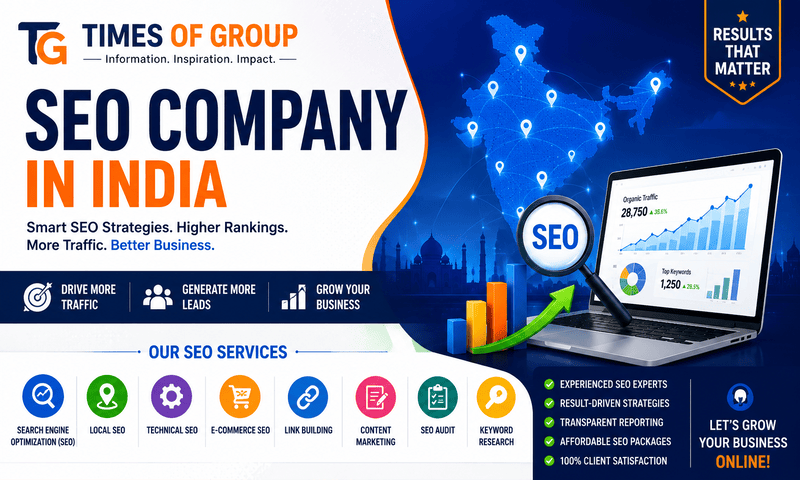
SEO Company India Offering Affordable SEO Packages
| Basic Plan $149/Monthly | Pro Plan $299/Monthly | Premium Plan $499/Monthly |
| SEO Services for 15 Keywords | SEO Services for 30 Keywords | SEO Services for 100 Keywords |
| Keywords Research and Approval (Yes) | Keywords Research and Approval (Yes) | Keywords Research and Approval (Yes) |
| Website & Competitor Analysis (Yes) | Website & Competitor Analysis (Yes) | Website & Competitor Analysis (Yes) |
| Content Duplicity Check (Yes) | Content Duplicity Check (Yes) | Content Duplicity Check (Yes) |
| Initial Ranking Report (Yes) | Initial Ranking Report (Yes) | Initial Ranking Report (Yes) |
| Increase website credibility (Yes) | Increase website credibility (Yes) | Increase website credibility (Yes) |
| ON PAGE SEO ANALYSIS | ON PAGE SEO ANALYSIS | ON PAGE SEO ANALYSIS |
| Meta Tags Creation (Yes) | Meta Tags Creation (Yes) | Meta Tags Creation (Yes) |
| Canonicalization (Yes) | Canonicalization (Yes) | Canonicalization (Yes) |
| URL Structure (Yes) | URL Structure (Yes) | URL Structure (Yes) |
| Content Optimization (Yes) | Content Optimization (Yes) | Content Optimization (Yes) |
| Image Optimization (Yes) | Image Optimization (Yes) | Image Optimization (Yes) |
| Heading Tag Optimization (Yes) | Heading Tag Optimization (Yes) | Heading Tag Optimization (Yes) |
| Website Speed Optimization (NO) | Website Speed Optimization (NO) | Website Speed Optimization (NO) |
| Robots.txt (Yes) | Robots.txt (Yes) | Robots.txt (Yes) |
| Sitemap Creation (Yes) | Sitemap Creation (Yes) | Sitemap Creation (Yes) |
| Google Analytics & Search Console Setup (Yes) | Google Analytics & Search Console Setup (Yes) | Google Analytics & Search Console Setup (Yes) |
| Blog Optimization (Yes) | Blog Optimization (Yes) | Blog Optimization (Yes) |
| LOCAL SEO SETUP | LOCAL SEO SETUP | LOCAL SEO SETUP |
| Google Map Integration on website (NO) | Google Map Integration on website (Yes) | Google Map Integration on website (Yes) |
| Google My Business Page Setup and Optimization (NO) | Google My Business Page Setup and Optimization (Yes) | Google My Business Page Setup and Optimization (Yes) |
| Create Local Citations Listing – 5 | Create Local Citations Listing – 10 | Create Local Citations Listing – 20 |
| Local Keyword Optimization 5 | Local Keyword Optimization 15 | Local Keyword Optimization 50 |
| CONTENT MARKETING | CONTENT MARKETING | CONTENT MARKETING |
| Onsite Blog – 1 | Onsite Blog – 3 | Onsite Blog – 6 |
| OFF PAGE SEO | OFF PAGE SEO | OFF PAGE SEO |
| Social Sharing – 30 | Social Sharing – 60 | Social Sharing – 150 |
| Blog Social Sharing 1 | Blog Social Sharing 3 | Blog Social Sharing 10 |
| PDF (Doc) Submissions – 1 | PDF (Doc) Submissions – 3 | PDF (Doc) Submissions – 10 |
| Social Media Sharing (Facebook) 1 | Social Media Sharing (Facebook) 5 | Social Media Sharing (Facebook) 15 |
| Local Citations 5 | Local Citations 15 | Local Citations 40 |
| Article submission 2 | Article submission 4 | Article submission 10 |
| Image submission 5 | Image submission 10 | Image submission 20 |
| Video Submission ( If you Provide) 1 | Video Submission ( If you Provide) 3 | Video Submission ( If you Provide) 10 |
| Reporting | Reporting | Reporting |
| Monthly Work and Ranking Report (Yes) | Monthly Work and Ranking Report (Yes) | Monthly Work and Ranking Report (Yes) |
Types of Link Building Techniques Used for Improving Search Engine Rankings
1. Article Link Building
“In article link building, we write a unique and informative article that is related to our services or products. The article is then published on relevant article submission websites or high-authority websites. By publishing content on reputable and authoritative platforms, we can earn valuable backlinks to our website.
These backlinks help improve the website’s authority, credibility, and search engine rankings. High-quality article links can also increase online visibility and drive targeted traffic to the website. As a result, article link building remains an effective Off-Page SEO strategy for improving a website’s overall search performance.
2. Image Submission Link Building
In image submission link building, we use images related to our products or services and submit them to image-sharing websites and platforms. These images typically include relevant information, branding, and a link back to our website.
When the images are published on image-sharing sites, they can generate valuable backlinks and increase the online visibility of the website. This helps improve brand awareness, attract potential visitors, and support overall SEO efforts.
3. Video Submission Link Building
Video Submission Link Building, we use videos related to the client’s products or services and publish them on video-sharing platforms and websites. These videos help generate traffic to the website and also provide valuable backlinks.
Video submission offers two major benefits. First, it helps generate targeted traffic because video content is extremely popular today. Most internet users prefer watching videos to learn about products, services, tutorials, and solutions. Many customers make purchasing decisions after watching videos that explain a product or service.
Second, video submissions can create quality backlinks that contribute to a website’s SEO performance and online visibility. As video content continues to dominate online platforms, video marketing has become an important part of Off-Page SEO and digital marketing strategies.
4. Document Sharing and PDF Submission Link Building
Document Sharing and PDF Submission Link Building, we create informative content about our services or products and then convert that content into PDF or document formats. These documents are then submitted and published on document-sharing and PDF-sharing websites.
When the documents are published on these platforms, they can include links pointing back to the website. This helps generate backlinks, which are an important part of Off-Page SEO.
5. Bookmarking Link Building
Bookmarking is a type of link-building technique in which we submit a website’s URL, title, and description to social bookmarking websites. Once submitted, the information is published on a dedicated page, creating a backlink that points to the website.
6. Press Release Submission
Press Release Submission is also a part of Off-Page SEO and link-building. In this process, we create and publish press releases containing special offers, company updates, announcements, product launches, business news, or other important information related to the website and business.
These press releases are published on press release distribution websites and platforms. When a press release includes a link to the website, it generates a backlink that points back to the site.
7. Guest Blogging Link Building Services
Guest Blogging is one of the most important, effective, and authority-building link-building strategies in SEO. It is widely considered a high-quality link-building technique because it helps generate backlinks from relevant and authoritative websites within the same industry.
In this process, we identify blogs and websites that are related to our industry, services, or niche. We then contact the website owners or administrators through email and propose publishing a guest blog on their website. We explain that the content will be relevant to their audience and related to their industry or services.
Once the website administrator approves the request, we create and submit a high-quality blog. Within the article, we include one or more backlinks pointing to our website, depending on the agreement with the website owner.
After the article is published, the backlinks become active and help improve the website’s authority, visibility, and search engine rankings.
8. Profile Building Link Building
Profile Building is an Off-Page SEO technique in which we create profiles on profile creation websites, business platforms, forums, and online communities. During this process, we complete the profile by adding relevant business information, such as the company name, website URL, description, contact details, and other important details.
9. Citations Business Directory Submission
Business Directory Submission is another important Link Building SEO technique. In this process, we submit a business website to online business directories and listing platforms.
We create a business profile by filling in all the necessary information, including:
- Brand Name
- Company Name
- Website URL
- Business Description
- Title
- Contact Information
- Business Category
- Location Details
After the submission is approved, the business listing becomes live on the directory’s category page or business listing page. This creates a backlink to the website and helps improve online visibility.
Business directory submissions are useful for increasing brand exposure, improving local SEO, generating citations, and helping potential customers discover the business. They also contribute to building a diverse backlink profile and supporting overall search engine optimization efforts.
What Factors Determine a Website’s Ranking According to the Country?
One important factor is the website’s domain extension. For example, if a website uses a .in domain, it is generally more relevant to users in India and may perform better in Indian search results. Country-specific domains often help search engines understand the primary target audience of a website.
Another factor is the hosting server and IP address location. The country where the website’s server is hosted can influence search performance. For example, if a website is hosted on a server located in India, it may have an advantage in serving Indian users due to lower latency and stronger geographic relevance. Similarly, websites hosted in the United States may perform better for U.S.-based audiences.
The third factor is content language and localization. The language used on a website significantly affects where and how the content performs. For example, content written in Hindi is more likely to attract and rank well for Indian users. Likewise, English content may perform differently depending on whether it is optimized for American English, British English, Canadian English, or Australian English.
Search engines analyze language, spelling, terminology, and user behavior patterns to determine the most relevant audience for the content. As a result, localized content often performs better in the regions and countries it is intended to target.
These are some of the smaller but important ranking factors that help search engines determine the geographic relevance of a website and present search results to the most appropriate audience based on country, language, and user preferences.
Local Business Information: For local SEO, having consistent business information, including address, phone number, and business listings, helps improve visibility in local search results.
Contact Us
How to Write SEO Meta Title and Descriptions ?
Meta Title:
SEO Keyword Research Services | Find High-Ranking Keywords for SEO
Meta Description:
Discover the best SEO keywords for your website with professional keyword research services. Identify high-traffic, low-competition keywords to improve search rankings, increase organic traffic, and grow your business online.
Alternative Version
Meta Title:
SEO Keyword Research Guide 2026 | Improve Google Rankings
Meta Description:
Learn how SEO keyword research helps websites rank higher in Google. Find the right keywords, analyze search volume and competition, and drive more targeted traffic to your website in 2026.
Business-Focused Version
Meta Title:
SEO Keyword Research Services | Increase Traffic & Rankings
Meta Description:
Get expert SEO keyword research services to identify profitable keywords, improve search engine rankings, attract targeted visitors, and generate more leads for your business.